
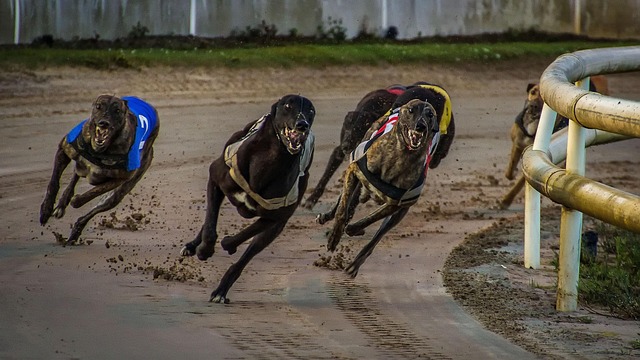
Greyhounds have a high predisposition to getting corns compared to other breeds of dogs.
The first reason for this is that greyhounds have small paw pads that have to carry a large body mass. This means a large load is concentrated onto a small area. The second reason is that unlike other dog breeds, greyhounds actually have less fat in their digital pads and hence less cushioning. Thirdly, the majority of greyhounds that enter the pet home often come from the racetrack. They are retired from racing because they have sustained musculoskeletal injuries, making the dogs too slow to race or unable to race. They are then moved into rescue for rehoming.
To understand how corns originate, you need to understand pain (sounds odd, I know).
Common areas of injury in ex racing greyhounds include
Shoulder – Collisions and slipping at speed causes damage to the medial glenohumeral ligament in the shoulder. Damage to this ligament allows excessive abduction to occur in the shoulder. Long term this causes instability in the shoulder.
Carpus (Wrist) – Increased loading due to running on a circular track can accelerate arthritic changes within this joint.
Toes – Joints in the toes can suffer from sprains and this is most evident when you look at the toe nails as they are often pointing excessively inward (medial) or outward(lateral). The flexor tendons of the toes are also subjected to immense load as the greyhound uses the toes to grip the ground to generate propulsion. Complete rupture of the Superficial Digital Flexor Tendon will result in a long toe while full rupture of the Deep Digital Flexor Tendon will result in a sprung toe. A sprung toe has a toe nail that faces upward to the ceiling. Toe injuries are often missed on examination and a common source of pain causing lameness.
Hip – Iliopsoas( hip flexor) injuries are super common because high loads are applied to this muscle as the dog retracts the hindlimb. The other semi common muscle that suffers damage is the Gracilis muscle. Damage to the Gracilis muscle often results in tearing and bleeding occurs in the inner thigh region. If the tear is significant, then the muscle belly can retract and scrunch up like a ball/lump.
Greyhounds may sustain musculoskeletal injuries in one limb but more commonly multiple limbs are involved. These injuries cause CHRONIC PAIN in the limbs and the dog will learn to compensate for this by leaning to the other limb which is pain free. Over time, this increase loading on the good leg will cause callus/corn formation on the paw pads of the toes. The CORN is the symptom of the dog trying to compensate for PAIN that is present either within that limb or from another limb.
Common treatments that involve soaking the corn, hulling the corn or even worse cutting the flexor tendon, often FAIL to resolve the corn because these treatments DO NOT ADDRESS THE CAUSE.
Seeking help from a Dog Physio would be a good start in helping your greyhound get rid of their corns. As most Animal Physiotherapists have a human physiotherapy background, we are more than capable of assessing musculoskeletal injuries in dogs. Obtaining a thorough examination of your greyhound will help to work out which limbs are painful and what areas (eg. shoulder, hip, toes) require treatment. Reducing pain will be the priority and often will involve a combination of medication and physiotherapy treatment modalities. Once the pain is managed, the corns will reduce in size and if all goes well, fully resolve giving you a happy and healthy hound.
Physio for Pets was a guest speaker on the Talking Couch Potato Podcast. To access this free podcast – available on Free the Hounds Website Episode 65.